What to Know Before Buying a Boat Dock or Boat Slip Property on Lake Norman
In This Guide
- 01 The Short Answer
- 02 Dock, Deeded Slip, Assigned Slip, Marina
- 03 How Duke Energy Controls the Shoreline
- 04 Transferring the Permit at Closing
- 05 When the Dock Was Never Permitted
- 06 Water Depth Decides What You Can Keep There
- 07 Inspect the Dock Like a Structure
- 08 Buying Into a Community Slip
- 09 What a Dock Costs to Build and Keep
- 10 What a Dock or Slip Is Worth at Resale
- 11 Insurance, Flood Zones, and Taxes
- 12 Your Due Diligence Checklist
- 13 Frequently Asked Questions
Buyers tour a Lake Norman property and see a dock. What they are actually looking at is a permitted structure, built over water the seller does not own, under rules set by a utility, attached to a property whose owner may or may not have the paperwork to prove any of it.
That gap between what a dock looks like and what a dock legally is produces most of the expensive surprises in this market. This guide covers what separates a private dock from a deeded slip from an assigned slip, how Duke Energy permitting works and what transfers at closing, how to judge depth and condition, what the whole thing costs to own, and the questions to ask before your due diligence period runs out.
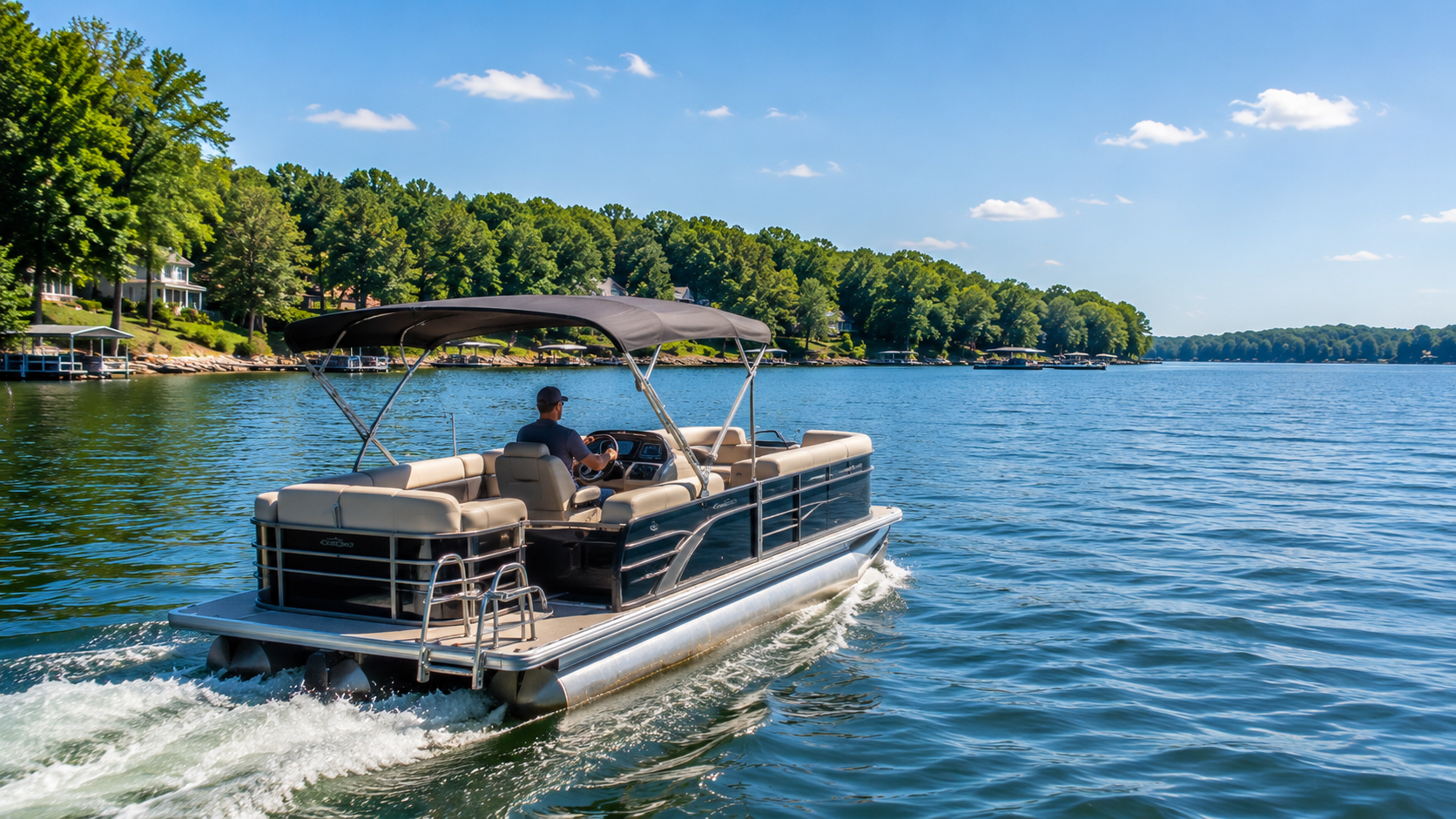
The Short Answer: The Dock Is a Permitted Structure, Not an Amenity
Lake Norman is a Duke Energy reservoir built on the Catawba River, not a natural lake. The water and the lakebed are controlled by the utility, and almost anything permanent that sits at or below full pond elevation needs Duke Energy's approval to exist legally. That includes piers, floating docks, boat lifts, boathouses, seawalls, riprap, and excavation.
So the questions that decide whether a dock is worth what the listing implies are not about the decking. They are whether a permit exists, whether the structure matches what the permit describes, whether the shoreline classification allows what you want to do next, how much water sits at the end of it in a low month, and what condition the pilings and flotation are in.
Buyers who ask those five questions during due diligence almost never get surprised. Buyers who assume a visible dock is an approved dock sometimes inherit an enforcement problem they did not create and cannot easily fix.
Private Dock, Deeded Slip, Assigned Slip, and Marina Slip Are Four Different Purchases
Listing language treats all of these as boat access. Legally they are not close to the same thing, and the difference shows up in price, in control, and in what you can do if the arrangement changes.
A private dock on your own waterfront lot gives you the most control and the most responsibility. You hold the permit, you pay for maintenance and replacement, and you decide what boat goes there, within the limits of the permit and the water depth.
A deeded slip is a recorded right to a specific slip in a community dock or marina, usually conveyed with the home. It behaves more like property and typically transfers with the sale. An assigned slip, by contrast, is a use right the association grants, often revocable, sometimes waitlisted, and sometimes subject to reassignment by a board. A leased marina slip is a contract that renews at whatever rate the marina sets.
Read the survey, the deed, and the association documents rather than the listing remarks. The single most useful question to ask about any community slip is simple: is this deeded, assigned, or leased, and what document proves it?
How Duke Energy Actually Controls the Shoreline
Duke Energy manages Lake Norman under a Shoreline Management Plan that regulates activity inside the project boundary. Applications run through the Lake Access Permit System, known as LAPS, and a Lake Services representative inspects the property and reviews the shoreline classification before a request is approved.
Classification matters more than most buyers realize. Every stretch of shoreline carries one, and it governs whether a dock is allowed at all and what size or configuration is possible. A lot classified for environmental protection cannot support a private dock, which turns dock access from a negotiation into a deal breaker if that was the point of the purchase.
Geometry matters too. Shoreline programs restrict docks in narrow coves to protect navigation and a neighbor's access, and side setbacks from riparian boundaries apply so your structure does not block the property next door. Duke evaluates the opening of a cove and may limit or deny a dock when the mouth is too narrow.
Duke approval is central but rarely the only approval. County and town building and zoning permits apply, and electrical work for a lift typically needs inspection. NC DEQ reviews projects that affect water quality or wetlands, and dredging or fill can require a Section 404 permit from the U.S. Army Corps of Engineers. Any homeowners association can impose stricter rules than the public agencies do.
One current change is worth knowing if you are buying a vacant lot. As of July 1, 2026, Duke Energy no longer reviews private dock applications where no home has been built on the adjoining lot. The rule applies across Duke lakes and covers private dock permits only, not shoreline stabilization requests. A lot marketed as dockable now means dockable after the house exists.

Transferring the Permit Is Part of the Transaction
Permitted docks on Lake Norman carry a permit number, usually on a small plate attached to the structure. Plates fall off, letters get lost, and a dock built by a previous owner is frequently still registered to whoever built it. Duke Energy releases information about a dock to the person it is registered to, which is why the transfer matters even when nothing about the structure is changing.
Applications to transfer a permit are submitted through LAPS, and a Lake Services representative inspects the facility to confirm it was properly permitted and has not been modified without approval. That inspection is the moment undocumented changes surface. Better for that to happen while you still have a due diligence period than after you own it.
Handle it in the contract. Ask for the permit number and any Duke correspondence up front, confirm the registration status directly with Lake Services, and make the transfer or the resolution of any permit discrepancy a condition of closing. A third party can submit a LAPS application on behalf of an owner, so a dock contractor or permitting service can carry the paperwork if the seller is slow.
When the Dock Was Never Permitted or Was Quietly Modified
This is the problem that turns a pleasant purchase into a project. Unpermitted structures and structures that no longer match their approved plans are common on a lake this old, because docks get extended, lifts get added, roofs get built, and nobody calls the utility.
The exposure transfers with the property. Duke Energy can require that an unapproved structure be modified or removed and the shoreline restored, and the owner of record when that happens is you. Enforcement is not automatic or immediate, which is exactly why sellers are sometimes unaware there is anything to disclose.
Grandfathering has limits worth understanding. A dock built under older rules may be acceptable as it stands, but that acceptance does not travel to a rebuilt version. Once you significantly modify or replace the structure, the new one has to meet current standards, which may mean a smaller footprint or a different configuration than what is out there today.
The practical move is to compare the permit file against the structure in front of you. Count slips, measure the footprint, note the lift, note the roof, and ask Lake Services whether what you are describing matches what they have on file.
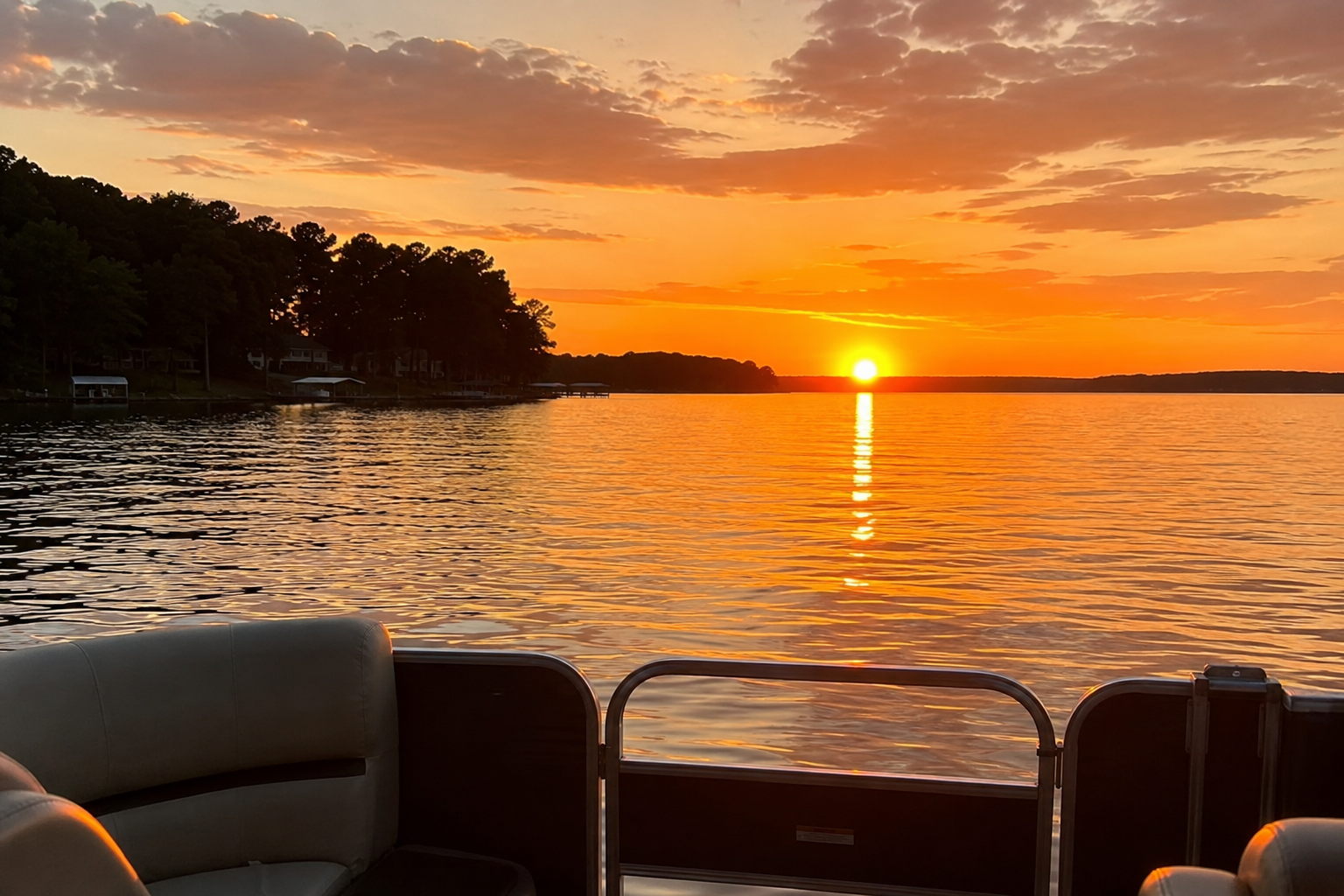
Water Depth Decides What You Can Actually Keep There
A dock is only as useful as the water under it. Lake Norman is managed against a gauge where 100.0 feet represents full pond, roughly 760 feet of elevation, and Duke operates toward seasonal targets commonly in the 95 to 98 foot range, holding the lake lower heading into winter to leave room for winter and spring rain.
That means the depth you see on a spring tour is the best case, not the normal case. Measure at the end of the dock, then ask what the same spot looks like at a lower seasonal target. When depth drops under roughly three feet in a low month, most powerboats stop being practical, and you have bought a dock that works part of the year.
Match the depth to the boat you actually intend to own. A pontoon needs far less water than a wake boat with ballast tanks. Buyers who plan to upgrade the boat later should evaluate the cove against that future boat rather than the current one.
Dredging is the obvious fix and the least available one. Disturbing the lake bottom can trigger state water quality review and a federal Corps permit, which adds months and real cost, and approval is never a given. Treat shallow water as a permanent condition of the property unless you have confirmed otherwise in writing.
Inspect the Dock Like a Structure, Because That Is What It Is
A standard home inspection stops at the shoreline. The dock, the lift, and the shoreline protection are their own inspection, and they are worth hiring a marine contractor to evaluate.
What to look at:
Pilings. Movement, rot at the waterline, and corrosion on hardware. Replacing pilings is among the most expensive dock repairs.
Flotation. Waterlogged or damaged floats sit low and fail unevenly. Check whether the dock rides level.
Decking and framing. Soft boards and rusted fasteners are cheap to fix early and structural to fix late.
Electrical. Anything powering a lift or lighting over water should be inspected and confirmed as permitted and grounded.
The lift. Capacity in pounds, cable and motor condition, and whether it suits your boat. A lift sized for the seller's boat may not hold yours.
Roof or cover. Condition, and whether it was ever approved, since covered structures are not allowed everywhere.
Seawall, riprap, and bank. Cracks, leaning, and soil loss behind a wall are urgent problems. Replacement runs into five and six figures.
Shopping in the fall or winter helps here, because lower water exposes pilings, footings, and bank erosion that summer hides. If you are touring in spring, ask for photographs of the same structure taken at low water.
Buying Into a Community Slip
Slips in community docks and neighborhood marinas are how most off water Lake Norman buyers get on the lake, and they are governed by documents rather than by Duke Energy alone. The association or marina holds the permit for the structure. What you hold is a right to use part of it.
Read the covenants, the bylaws, and the marina policies before you commit, and get answers in writing on the following. Whether the slip is deeded, assigned, or leased. Whether the right transfers automatically at closing or requires a new application or board approval. Whether there is a waitlist and how long it currently runs. What the annual dues are and what they cover. What size boat the slip and the community permit allow. Whether you can rent the slip out or lend it to a guest. Who insures the structure and who carries liability for what happens on it.
Annual maintenance dues for community slips and piers around the lake commonly run a few hundred dollars, and boat size limits are more restrictive than buyers expect. A slip that fits a 22 foot bowrider does not necessarily fit a 26 foot cruiser, and that limit is usually written down somewhere.
The failure case to avoid is buying a home for its exclusive use slip and discovering later that the right was a courtesy the board can reassign. Exclusive use language in a marketing sheet is not the same as a recorded interest in a deed.
What a Dock Costs to Build, Repair, and Keep
Costs on this lake are specific enough to plan around. One established Lake Norman dock builder publishes rates of about $50 per square foot for docks, piers, and floats, boat lifts starting near $6,750, personal watercraft lifts starting near $2,875, riprap, seawall, or retaining wall from about $38 per square foot, and pile driving around $21 per linear foot.
National cost data lands in the same neighborhood. Installed docks commonly run $15 to $60 per square foot, boat lifts $2,000 to $20,000 depending on type and capacity, and routine annual maintenance $300 to $1,200 depending on material. Wood needs the most upkeep, while composite and aluminum cost more up front and less every year.
Two cost items deserve their own line in your budget. Permit work, including engineered drawings and agency submittals, is its own expense and its own timeline, with Duke authorization commonly taking weeks to months depending on complexity. And shoreline protection is the sleeper. A failing seawall is a five figure repair at minimum and is not optional once it starts to go.
Timing matters for scheduling as much as for price. Dock contractors around the lake are busiest in spring and summer, so work you want done before the season generally has to be contracted the winter before.

What a Dock or Slip Is Worth at Resale
Water access is the reason people buy here, so it prices accordingly, and the tiers are wide. True waterfront with a permitted private dock sits at the top. Off water homes with a deeded slip come next, and around Lake Norman a deeded slip is commonly described as adding roughly $25,000 to $50,000 to a property's value depending on location. Water access with shared amenities and no assigned slip is another step down, and a water view with no access is a view.
Within the waterfront tier, the dock itself moves the number. Depth at the end of it, whether it holds a lift, whether it is covered where covers are allowed, and the condition of the pilings and flotation all show up in what a buyer will pay. A deep water dock in a protected cove with a newer lift is a different asset than a short pier over three feet of water, even when the houses match.
The resale argument for handling permits correctly is straightforward. Every issue you inherit and ignore becomes an issue you disclose or a discount you absorb when you sell. Clean permit records are worth more than most sellers expect and cost almost nothing to maintain.
Insurance, Flood Zones, and the Tax Line
Three carrying costs catch buyers off guard, and all three are answerable before closing.
Insurance first. Confirm with your carrier whether the dock structure and dock liability are covered under your homeowners policy or require an endorsement, and check whether an association or marina requires proof of coverage. Docks are frequently excluded or sublimited by default.
Flood next. Waterfront properties may need a separate flood policy, National Flood Insurance Program coverage caps building coverage at $250,000, and there is typically a 30 day waiting period before a new policy takes effect. That waiting period is a reason to price flood coverage early in the transaction rather than the week before closing.
Taxes last. Significant dock, lift, or boathouse improvements can affect assessed value, and the four counties around the lake handle assessments differently. It is worth a call to the county tax office if you intend to add or rebuild anything substantial after closing.
Your Due Diligence Checklist
North Carolina uses a due diligence period rather than traditional contingencies, commonly two to three weeks, during which a buyer can terminate for any reason and recover earnest money while typically forfeiting the due diligence fee. Closings are handled by attorneys. That window is short for lake work, so start the day you go under contract.
Permit file. Get the permit number, confirm the registration status with Duke Energy Lake Services, and compare the paperwork against the structure that exists.
Shoreline classification. Confirm what the classification allows, especially if you plan to add a lift, extend, cover, or rebuild.
Survey. Confirm the lot line at the shoreline, riparian side setbacks, and any encroachment by or onto a neighbor.
Depth measurement. Measure at the dock and ask what the same spot looks like at a lower seasonal target.
Marine inspection. Pilings, flotation, decking, electrical, lift capacity, roof, seawall and riprap.
Association documents. For any community slip, confirm in writing whether it is deeded, assigned, or leased, what transfers, and what it costs annually.
Insurance quotes. Homeowners with dock coverage, liability, and flood, priced before the window closes.
Contract language. Make permit transfer, or resolution of any permit discrepancy, a condition of closing.
Duke Energy Lake Services can be reached at 704.382.8086 or 800.443.5193, and recorded lake information is available at 800-829-LAKE. Working with an agent who has closed waterfront transactions on this lake matters here more than in any other segment of the Charlotte market, because most of this checklist has to happen in parallel inside a two to three week window.
The Finigan Group, founded by Josh and Katie Finigan in 2016 and brokered by eXp Realty, works the Lake Norman towns alongside Charlotte. RealTrends ranked the team #1 in Charlotte by verified sales volume in 2026 and #13 in North Carolina, and Charlotte Observer readers voted them Charlotte's Best Realtor in 2023, 2024, and 2025. Ask any agent you interview how many waterfront or slip transactions they have personally closed on this lake in the last two years, and how they verify a dock permit. The answer should be a process, not enthusiasm.
Frequently Asked Questions
-
Approvals are generally tied to the property, but the transfer is not automatic paperwork you can skip. Applications to transfer a permit are submitted through Duke Energy's Lake Access Permit System, and a Lake Services representative inspects the facility to confirm it was properly permitted and has not been modified without approval. Confirm the permit number and registration status before closing and make the transfer a condition of the contract.
-
The problem transfers with the property. Duke Energy can require that an unapproved structure be modified or removed and the shoreline restored, and the owner at the time of enforcement is responsible. Compare the permit file against the structure during due diligence, and resolve any discrepancy before closing rather than after.
-
A deeded slip is a recorded right to a specific slip that typically conveys with the home and behaves like property. An assigned or community slip is a use right granted by the association, which can be waitlisted, revocable, or subject to reassignment. They feel identical on the water and are very different on paper, so confirm which one you have in writing.
-
Enough at the lake's lower seasonal targets, not at full pond. Duke operates toward targets commonly in the 95 to 98 foot range against a 100 foot full pond gauge, and holds the lake lower heading into winter. When depth at the dock falls under roughly three feet in a low month, most powerboats become impractical. Match the measurement to the boat you intend to own, not the one in the listing photo.
-
Sometimes, but treat it as unlikely rather than routine. Disturbing the lake bottom can trigger state water quality review and a federal Section 404 permit from the U.S. Army Corps of Engineers, which adds months and significant cost with no guarantee of approval. Evaluate the property assuming the depth stays as it is.
-
One established Lake Norman builder publishes about $50 per square foot for docks, piers, and floats, boat lifts starting near $6,750, personal watercraft lifts starting near $2,875, riprap or seawall from about $38 per square foot, and pile driving around $21 per linear foot. National data puts installed docks at $15 to $60 per square foot with annual maintenance of $300 to $1,200. Permitting and engineered drawings are a separate line item.
-
Yes, and meaningfully. Around Lake Norman a deeded boat slip is commonly described as adding roughly $25,000 to $50,000 to a property's value depending on location, and true waterfront with a permitted private dock prices well above both slip and water access homes. Within the waterfront tier, depth, lift, cover, and dock condition all move the number.
-
Not before the house. As of July 1, 2026, Duke Energy no longer reviews private dock applications where no home has been constructed on the adjoining lot, a change that applies across Duke lakes. The restriction covers private dock permits only and does not apply to shoreline stabilization requests. Factor the sequencing into any lot purchase where dock access is the point.
-
County and town building and zoning departments, including electrical inspection for lift wiring. NC DEQ where water quality or wetlands are affected. The U.S. Army Corps of Engineers for dredging, fill, or impacts to navigable waters. And any homeowners association, whose covenants can be stricter than the public rules. Duke approval is central but rarely the only approval.
-
Not always, and rarely at the level owners assume. Confirm with your carrier whether the structure and dock liability are covered or need an endorsement. Flood is separate, National Flood Insurance Program building coverage caps at $250,000, and new policies typically carry a 30 day waiting period, so price it early in the transaction.
Thinking About Buying on the Lake?
Start Before the Season You Want to Buy In
Tell us the cove, the dock, and the timeline you want, and we will build the watch list now so you are ready when the right waterfront home comes up. More than 800 homes sold and over $280M in volume since 2016.
Talk to a Lake Norman Agent →Or call and text (704) 200-9833
